
Last Updated on November 10, 2026
How long does ceramic cookware last? If you’re comparing cookware brands, start by checking what “ceramic” means on the box. A ceramic-coated pan can lose its easy food release while the metal body is still sound. A solid ceramic pot has a different weak point: it can chip or crack after a drop or a sudden temperature change.
If you want an alternative to traditional PTFE nonstick, ceramic-coated ceramic cookware can make eggs and pancakes easier to flip and clean up. Low to medium heat, soft utensils and gentle handwashing help keep the coating in good condition.
What Is Ceramic Cookware?
Ceramic-coated cookware usually has a metal body, often aluminum, with a thin ceramic-based nonstick cooking surface. The metal base can keep the pan relatively light and help it heat quickly. Solid ceramic cookware has a fired ceramic body and may have a food-contact glaze. It has no metal pan body under the surface, and food release depends on the piece and how you cook with it.

For more on coatings and cooking behavior, see how ceramic compares with traditional nonstick.
Why Should You Get a Ceramic Cookware Set?
A smooth ceramic-coated surface can help delicate food release with a little oil or butter. Cleanup is often quick when the coating is in good shape. If you’re browsing ceramic cookware for daily use, check the exact model for induction compatibility, oven temperature limits for the pan, lid and handle, and whether the pieces are dishwasher-safe. Use glazed ceramic pieces intended for food contact and follow their heating instructions.
Drawbacks to Consider
Sharp tools can scratch a coating, and repeated overheating can leave sticky oil buildup or shorten the coating’s useful life. For high-heat searing, a suitable uncoated pan such as stainless steel is a better fit. Solid ceramic needs gentle handling and should only go on a stovetop if the maker lists it for that use.
How Long Does Ceramic Cookware Last?
There’s no reliable one-to-three-year rule for every ceramic-coated pan. Useful life depends on the coating and pan construction, how often you cook, the heat you use, and how you clean and store it. An everyday skillet sees more wear than a pan you use occasionally. A coating warranty covers the defects described in its terms and gives no timetable for normal wear.
With ceramic-coated cookware, judge useful life by how well food releases after gentle cleaning and how the surface looks. With solid ceramic, look for chips, cracks or other damage to the body or glaze. A drop can end a solid ceramic pot’s useful life in one afternoon.
Why Is My Ceramic Pan Sticking, and How Can I Fix It?
A sticky patch can come from cooked-on oil or food residue. Let the pan cool, then wash it with warm water, mild dish soap and a soft sponge. If buildup remains, follow the maker’s instructions for deep cleaning. Use a melamine sponge only if the maker recommends it for that surface. Avoid steel wool and abrasive powders on the coating.
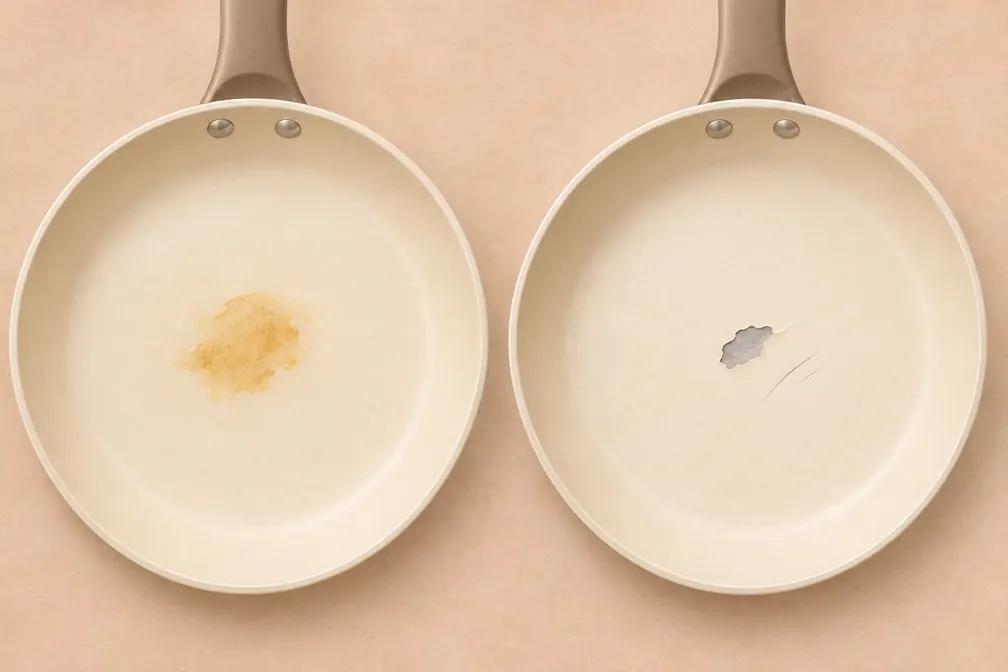
Once the pan is clean, try cooking on low to medium heat with a small amount of oil or butter. Skip cooking sprays if the maker advises against them, since they can leave a sticky film. If food still sticks repeatedly on a clean, undamaged surface at the recommended heat, the coating may have worn. Cleaning can remove residue, while worn coating stays worn.
Is It Safe to Use a Scratched Ceramic Pan?

A dark mark alone can be residue or discoloration. Clean the pan first and check whether the surface is still smooth. If you see a shallow scratch, check the manufacturer’s guidance for your model. A scratch alone doesn’t tell you what, if anything, is transferring into food.
- Ceramic-coated pans. Stop using a pan if the coating is peeling or flaking, or a deep gouge exposes the metal underneath. Replace a pan that rocks on a flat cooktop or has a handle that can’t be secured. If sticking persists despite cleaning and gentler cooking, replace it when it no longer does the job you bought it for.
- Solid ceramic pots and lids. Stop using pieces with a crack or a chip on the cooking surface or rim. Check with the maker about any small exterior chip before heating the piece again. Replace cracked cookware or lids before the next use.
How Do You Maintain Ceramic Pots and Pans to Make Them Last Longer?
Follow your model’s care instructions and protect the surface during cooking, washing and storage.

- Cook gently. Use low to medium heat for most dishes in ceramic-coated pans and avoid leaving an empty pan on a hot burner. For solid ceramic rated for stovetop use, follow its own preheating instructions and avoid abrupt temperature changes.
- Use soft utensils. Choose silicone, wood, bamboo or heat-safe nylon for coated pans. Avoid cutting food in the pan.
- Let it cool before washing. Handwash coated pans with mild dish soap and a soft sponge. If the label permits dishwashing, handwashing is still the gentler choice.
- Protect it in storage. Put a soft pan protector between stacked pieces to prevent rubbing and knocks. Handle solid ceramic carefully around hard counters and sinks.
Bottom Line
How long does ceramic cookware last in your kitchen? Start with the type you own. If a coated pan sticks, clean it gently and try lower heat before deciding it’s worn out. If a solid ceramic piece cracks, take it out of use right away.
FAQs
Should I Choose Ceramic Cookware First?
If you mostly cook eggs or pancakes, start with one coated skillet. Check the handle, burner fit and care instructions before buying a set.
Does Ceramic Cookware Lose Its Nonstick Surface?
Yes, the coating can lose its easy food release over time. Clean off any cooked-on oil before judging wear. Solid ceramic may need more oil or a different preheating routine.