
Last Updated on November 10, 2026
A brown spot in a ceramic frying pan is often burnt food or cooking oil. A chip, crack or lifting edge is a different problem. Even professional chefs deal with food sticking, and the best way to clean a pan depends on its surface. Start with the gentle method below once the pan has cooled.
Hybrid cookware option HexClad Hybrid Pan Set
How to remove stains and burn marks from a ceramic frying pan
Check whether your ceramic cookware is ceramic-coated metal or solid ceramic. The coating on a metal pan can wear or peel. A solid ceramic pan can chip or crack, especially after a drop or sudden temperature change. Still wondering, “Is my ceramic cookware safe?” Look at the pan when it’s clean and dry so you can tell whether a mark sits on the surface or is a break in it.

| What you see | What to do |
|---|---|
| Raised burnt food or a sticky brown oil film | Soak and wash gently as the maker directs. Check again after drying. |
| A flat stain or dull patch on a smooth surface | A flat mark can be cosmetic. If food still sticks after gentle cleaning, the coating may be worn. |
| A rough or bare patch, peeling edges or loose flakes | Set the pan aside if the coating has worn through, is lifting or is flaking. Ask the maker about replacement. |
| A crack or chip in solid ceramic | Set the pan aside and ask the manufacturer about replacement. Cleaning cannot repair a crack. |
Start with warm water, mild dish soap and a soft sponge
- Let the pan cool completely. Take it off the heat and let it come to room temperature on a heat-safe trivet. Avoid running cold water into a hot pan or putting a hot solid ceramic pan on a cold counter. A sudden temperature change can warp metal or crack solid ceramic.
- Soak stuck-on food. Fill the cooled pan with warm water and a little mild dish soap if the maker permits it. Give the residue time to soften. For example, HexClad’s current hybrid cookware guide recommends a 10–15 minute warm, soapy soak for deeper cleaning. Use the instructions for the exact pan you own.
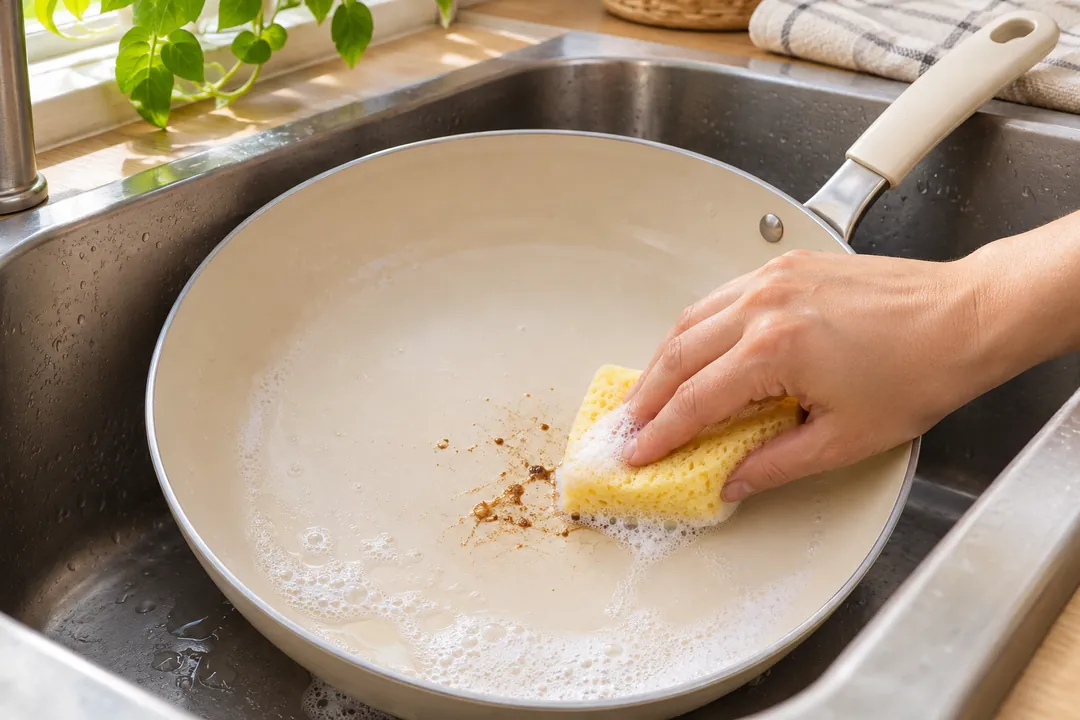
- Wipe gently, rinse and dry. Use the soft face of a non-abrasive sponge or a soft dishcloth. Lift softened food gently, then rinse well and dry with a soft towel. Repeat the soak if needed and the manual allows it.

When should you use baking soda?
If the manufacturer approves baking soda for the stained area, mix a little with water to make a soft paste. Apply it to the spot, let it sit as directed, then rinse and wash with a soft sponge. Caraway describes a gentle paste for stubborn ceramic-pan stains. GreenPan’s US care FAQ specifies a baking-soda paste for the exterior and gives separate directions for the cooking surface. Check the care guide for your model before using any paste inside the pan.
Skip dry scrubbing powders, steel wool and metal pads on ceramic-coated nonstick. Avoid home remedies involving dryer sheets, hydrogen peroxide or salt scrubs. If your maker gives a different approved method for stubborn residue, such as a short simmer or a specific cleaning sponge, follow that method and let the pan cool before handling and rinsing.
How to keep stains from coming back
Cook within the heat range in your manual. Oil that gets too hot can leave a sticky film behind. Let the pan cool after cooking, then wash off oil and food before they build up. If food still sticks on a clean pan or the surface feels rough, check the signs that a ceramic pan is worn out.

Frequently asked questions
How often should I season my ceramic cookware?
Follow your model’s care guide. Some ceramic-coated pans need a light wipe of oil before first use, while other models need only washing and drying. Oil won’t repair scratches, peeling or a crack.
Can I use steel wool on my ceramic cookware?
Use a soft sponge on a ceramic-coated pan. Steel wool can scratch the coating and make it wear faster. For solid ceramic, use the sponge or cleaning tool the maker lists for your model.
Earlier stain-removal photos
These older photos show vinegar and baking soda together and salt on a pan. For a coated pan, use the gentle cleaning steps above and only the cleaner your manufacturer approves for that surface.

