
Last Updated on November 10, 2026
How safe is ceramic cookware for everyday cooking? Start by checking what the pan is made of. A solid ceramic pot and a metal pan with a ceramic coating can both be sold as ceramic cookware. They heat differently, and the checks you make before putting them on the stove are different, too.
Is ceramic cookware safe to use?
Food-use ceramic cookware in good condition can be a practical choice when you follow the maker’s instructions. When shopping for healthy ceramic cookware, check whether the piece is meant for cooking, which heat sources it can go on, and whether the manufacturer gives separate limits for the lid and handles.
What is ceramic cookware made of?
Solid ceramic cookware has a fired ceramic body. Ceramic-coated cookware has a metal body, often aluminum or stainless steel, with a thin ceramic-based cooking surface. Here’s how to tell which checks matter for each type.
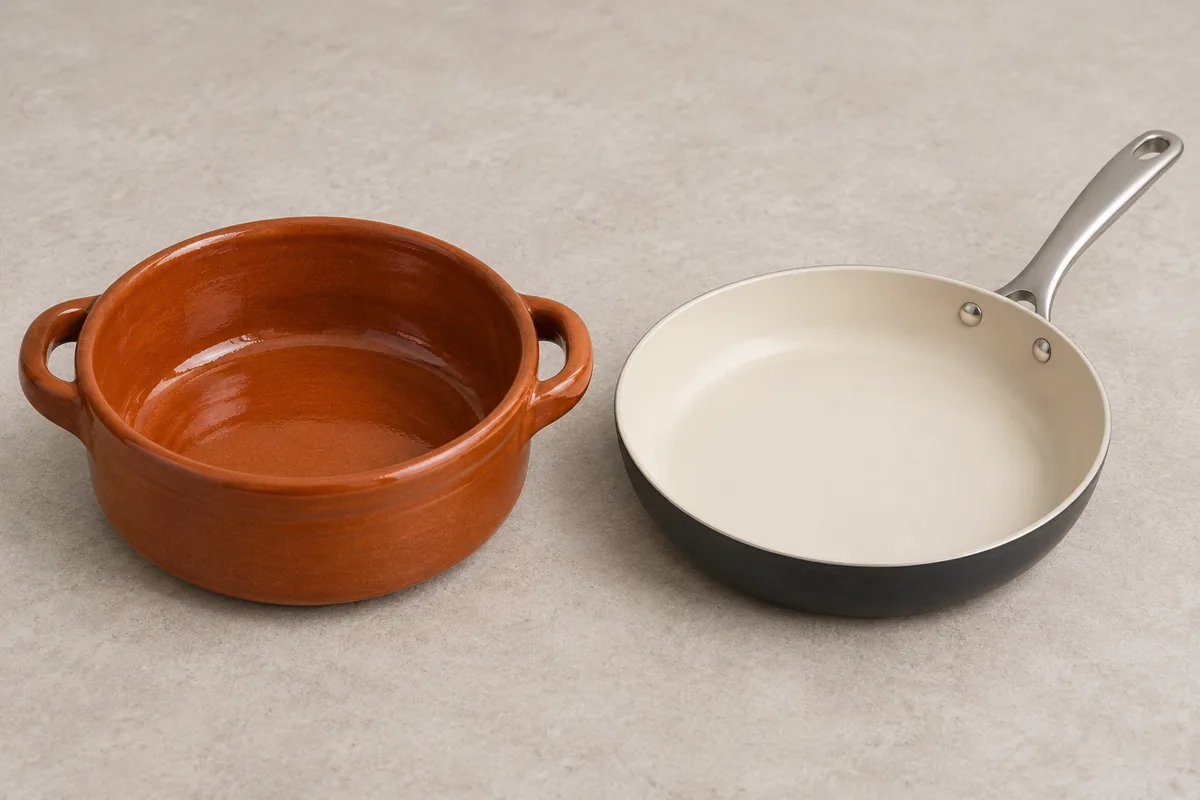
| What to check | Solid ceramic | Ceramic-coated metal |
|---|---|---|
| Cooking surface | Fired ceramic, often with a glaze | A ceramic-based finish over metal |
| Stove use | Check for stovetop approval | Check cooktop compatibility, especially induction |
| Common wear | Cracks or chips from drops or sudden temperature changes | Scratches, loss of food release, or peeling coating |
100% ceramic cookware
Makers can shape a mixture of clay, water, and minerals in a mold and fire it in a kiln. Some pieces have a glaze that seals the surface and makes it easier to clean. Xtrema’s pure ceramic cookware is one example of this construction.
Solid ceramic can hold up with careful use, but it can chip from a knock or crack after a sudden temperature change. Xtrema advises warming its cookware gradually and keeping a hot piece away from cold water or a cold countertop. Check the care instructions for your own cookware before using it on a burner.
Ceramic-coated cookware
The metal body spreads heat and supports the thin cooking surface. The finish gives you easier food release when it is in good condition. If you’re deciding between a coated pan and an uncoated metal pan, here’s how ceramic compares with stainless steel.
Over time, a ceramic coating can lose some of its food release. How long it lasts depends on the pan, the heat you use, and how you clean it. For a minor surface mark, check the maker’s guidance. If the coating is peeling or flaking into food, stop using the pan and check the warranty or replacement options.
Ceramic-coated nonstick cookware
PTFE is the polymer used in many traditional nonstick coatings. PFOA is a separate PFAS that was formerly used as a processing aid. Companies in the U.S. EPA’s stewardship program reported meeting its 2015 PFOA phaseout goals. A “PFOA-free” label addresses PFOA alone, so check the maker’s disclosure for the exact cookware if you want to avoid PTFE or other PFAS. Our guide to what PFOA means on cookware labels explains the difference.
Germany’s Federal Institute for Risk Assessment says it expects no adverse health effects from PTFE cookware used as intended. Severe overheating, especially when the pan is empty, can release hazardous fumes. With any nonstick cookware, use the heat settings and cookware limits specified by its maker.
How is a nonstick coating applied to cookware?
One common process is called sol-gel. A liquid coating mixture is sprayed onto a prepared metal surface and cured with heat to form a thin, hard finish. The formulation varies by manufacturer. How quickly a pan heats also depends on the metal body, its thickness, and the burner.
How much heat can ceramic cookware handle?
Use the oven rating for the exact pan. A glass lid, a handle, or a removable grip can have a lower limit than the pan body. With those parts in place, follow the lowest rating. Use the broiler only if the manufacturer specifically allows it.
On the stovetop, low to medium heat is a good starting point for ceramic nonstick. Avoid leaving an empty coated pan on a hot burner. Let it cool before washing, and keep hot solid ceramic away from cold surfaces.
Things to check when buying ceramic cookware
- Check the product description for a solid ceramic body or a ceramic coating over metal.
- Choose a piece labeled for cooking. If it is glazed, look for product-specific testing for how much lead and cadmium can leach from the food-contact surface.
- Match the pan to your stove. For induction, look for a manufacturer-rated magnetic base that meets your cooktop’s size requirements.
- Check a new pan for chips, cracks, and loose handles before the first use. Ask for a replacement if it arrives damaged.
- Look up the instructions for utensils and cleaning. Wood and silicone are gentle choices for a ceramic nonstick finish.
How safe is ceramic cookware?
For glazed foodware, the glaze matters as much as the ceramic body. Lead or cadmium in some glazes and decorations can transfer to food. The U.S. FDA publishes enforcement action levels for the amounts that leach in tests of different kinds of ceramic foodware. California’s Proposition 65 is a separate state law that can require warnings about exposure to listed chemicals.
Use decorative pottery for display. If you have an antique, heavily worn, or unlabeled ceramic piece and can’t verify that it was made for food use, choose a different vessel for cooking, serving, or storing food.
Common troubleshooting tips for ceramic cookware
- Food sticking? Wash off oil residue with warm, soapy water and a soft sponge. Try a little cooking oil and a lower heat setting next time.
- Chipping or cracking? Stop using a cracked ceramic pot or a pan with flaking coating. Check the manufacturer’s guidance on damage and replacement.
- Stains or burn marks? Soak the cooled pan in warm, soapy water. Use baking soda only on surfaces the maker recommends it for.
- Nonstick surface wearing down? Switch to soft utensils and skip abrasive scrubbers. Use a cloth or pan protector between stacked pans.
- Pan overheating? Match the pan to the burner and start on low to medium heat. Let it cool before adding cold water or washing.
- Loose handle? Tighten a serviceable screw as directed by the maker. If the handle still moves, take the pan out of use until it is repaired or replaced.
- Lingering odors? Soak and wash off any food or oil film with mild dish soap, then rinse and dry the pan.
Bottom line
When choosing ceramic cookware, buy a piece intended for food and for the way you cook. With solid ceramic, pay attention to the glaze and avoid sudden temperature changes. With a ceramic-coated pan, use gentle heat, protect the finish, and replace the pan if the coating starts to peel.
Frequently Asked Questions
Is ceramic cookware safer than traditional nonstick cookware?
Both types have their own use limits. If avoiding fluorinated coatings is your priority, check whether the manufacturer discloses that the specific ceramic finish is made without PTFE or other PFAS. For a PTFE pan, follow its heat limits and avoid overheating it.
Does ceramic cookware contain lead or cadmium?
Some glazes and decorations can contain these metals. Look for food-use labeling and product-specific leach testing, especially if you’re buying glazed ceramic cookware.
Can ceramic cookware be used on all stovetops?
Check the maker’s stove compatibility. Some solid ceramic pieces are made for the oven only. An induction cooktop needs a suitable magnetic base, so a ceramic-coated pan can work if it is designed for induction.
Is ceramic cookware durable?
Solid ceramic can last with careful handling, but it can break if dropped. On a coated pan, the metal body may last longer than the nonstick finish. Heat, utensils, and cleaning all affect how the finish wears.
How do I clean and maintain ceramic cookware?
Let it cool and hand-wash it with warm water, mild dish soap, and a soft sponge. Follow the maker’s care instructions for stubborn residue and dishwasher use.