
Last Updated on November 4, 2026
Shopping for your kitchen can feel like a never-ending loop. New cookware features and styles make the choice harder, especially when stainless steel, copper, nonstick and cast iron all promise something different. If you are comparing stainless steel vs nonstick cookware, start with the meals you cook most often.
Stainless steel is a practical choice for browning meat, making pan sauces and everyday simmering. Nonstick makes eggs, pancakes and delicate fish easier to release. Both have a place in the kitchen. Understanding their construction, strengths and limits will help you decide which one to buy first.
Stainless Steel vs Nonstick Cookware: Quick Comparison
| Cookware feature | Stainless steel | Nonstick |
|---|---|---|
| Best uses | Browning, searing, pan sauces, boiling and braising | Eggs, pancakes, delicate fish and gentle everyday cooking |
| Cooking surface | Uncoated stainless steel in this comparison | A nonstick coating, commonly PTFE or ceramic |
| Heat distribution | Depends on the aluminum or copper core/base and overall construction | Depends on the metal body and base, not the coating alone |
| Cooking fat | A little oil often helps with frying; boiling and steaming need none | Usually needs less fat for easy release; follow the care instructions |
| Oven use | Check the individual pan, handle and lid ratings | Some are oven-safe; limits depend on the coating, handle and lid |
| Induction | Requires a suitable magnetic base | Also requires a suitable magnetic base |
| Cleaning | Stuck food may need soaking or a suitable stainless cleaner | Soft sponge, mild detergent and gentle washing |
| Durability | No nonstick coating to wear away; good construction can last many years | Coating life varies with quality, heat, utensils and cleaning |
| Cost and weight | Often heavier and more expensive when fully clad, but ranges vary | Many affordable, lightweight options; premium versions also exist |
This stainless steel vs nonstick cookware comparison refers to uncoated stainless steel. A stainless steel pan can also have a nonstick interior; in that case, follow the coating’s care limits.
What is Stainless Steel Cookware?
The shiny metallic pans in the cookware aisle are often stainless steel. Stainless steel is an iron-based alloy containing chromium, and many cookware grades also contain nickel. Its corrosion resistance comes from a thin protective surface layer, rather than a separate shiny coating that makes the pan nonstick.
Stainless steel alone does not spread heat particularly well. Many pans therefore have an aluminum or copper core, either bonded through the body or enclosed in a base disc. These metals improve heat distribution; they do not make the pan induction-compatible. Induction requires a suitable magnetic outer base. Check the manufacturer’s compatibility details instead of assuming every stainless pan will work.
Why should you buy stainless steel cookware?
Stainless steel is useful when you want a browned crust and the flavorful bits left behind for a pan sauce. You can also use suitable pots for soups, pasta and braises. Frying takes more attention than it does in nonstick: moderate preheating, a little oil and waiting before turning food all help reduce sticking.
A well-made core or thick base helps distribute heat, but maximum burner power is rarely needed for routine frying. Stainless steel is also a practical surface for tomato sauces and other acidic recipes. For oven cooking, check the rating of the entire pan, including its handle and lid. A long handle alone does not prove oven suitability.
What Are the Benefits of Purchasing Stainless Steel Cookware?
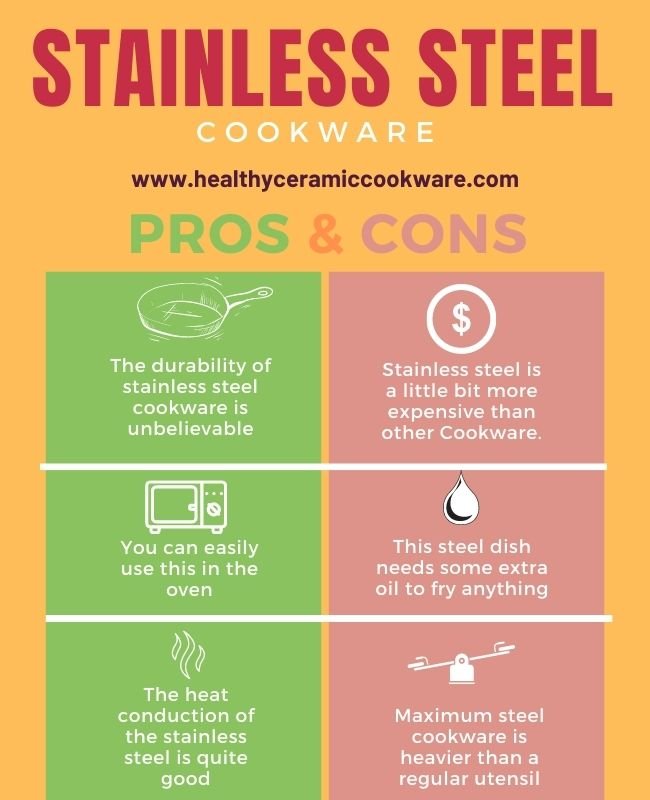
- Durability: There is no nonstick layer to wear away. A well-made pan can serve for many years with proper use, though it can still warp or suffer damage from overheating and poor care.
- Oven Friendly: Many stainless pans can move from the stovetop to the oven. Use only within the model’s stated limits; lids and handle materials may have lower ratings.
- Induction Compatible: Stainless cookware with an appropriate magnetic base can work on induction. A magnet sticking firmly to the base is a useful quick check, but confirm the cooktop’s size requirements too.
- Non Reactive: Stainless steel is generally suitable for acidic dishes without the strong reactions associated with bare aluminum or copper. That does not mean every alloy releases zero metal under all conditions.
- Heat Distribution: An aluminum or copper core spreads heat more effectively than stainless steel alone. Construction and thickness matter more than a shiny finish.
What are the Disadvantages of Using Stainless Steel Cookware?
- Budget: Fully clad cookware can cost more upfront than a basic aluminum nonstick pan. There are also affordable stainless options, so compare construction and the pieces you actually need.
- Weight: Thick bases and multiple layers can add weight. Check whether you can lift the pan comfortably, especially when it is full.
- Maintenance: Burnt food and oil residue may take soaking or a suitable cleaner to remove. Stainless steel is not naturally nonstick, although routine washing is usually straightforward.
- Cooking with less oil takes practice: Eggs and delicate foods are less forgiving than in nonstick. You do not need to flood the pan with fat, and boiling, steaming or simmering does not require added oil. Stainless steel does not automatically make a meal unsuitable for a balanced diet.
What is Nonstick Cookware?
Nonstick cookware has a coating designed to help food release. Many pans have aluminum bodies, which can be light and responsive to heat. Others use a stainless steel body with a coated interior. The metal underneath affects weight and heat distribution; the coating mainly affects food release and care.
Two common coating types are PTFE-based nonstick and ceramic nonstick. They are different materials, and “PFOA-free” does not mean “PTFE-free” or “PFAS-free.” If you are considering ceramic, our ceramic and stainless steel comparison explains that choice in more detail.
Why should you buy non-stick cookware?
Nonstick is convenient for breakfast eggs, pancakes and foods that tear easily when they stick. Low to medium heat is usually enough. Use a small amount of butter or oil when the instructions recommend it, and avoid aerosol cooking sprays when the manufacturer advises against them because residue can build up. For long-simmered tomato sauces, stainless steel is often the more versatile choice; follow a coated pan’s instructions on ingredients and food storage.

What Are the Advantages of Purchasing Non-stick Cookware?
- Lightweight: Many aluminum nonstick pans are easy to lift, move and store. Heavier coated stainless or thick-base versions are also available.
- Heat Conduction: An aluminum body can heat efficiently. Evenness depends on the base and thickness, so a lightweight pan is not automatically better at spreading heat.
- Easy to Cook: Easy release helps with delicate foods and can reduce the fat needed for frying. The ingredients and cooking method still determine the meal’s nutritional value.
- Low maintenance: Food residue is often easy to wash away with warm soapy water and a soft sponge. Gentle care helps protect the surface.
- Trendy Design: Nonstick ranges come in different colors, shapes and finishes. Choose a comfortable handle and suitable cooking surface as well as a design you like.
- Save time: Easier food release and cleanup can simplify everyday meals. Turning up the burner does not necessarily cook food better or save time.
- Budget: Many basic nonstick pans are affordable. Premium coated cookware can cost more, so compare similar sizes and construction.
What are the Setbacks of Using Non-Stick cookware?
- Overheating risk: It is inaccurate to call all nonstick cookware harmful during normal use. PTFE coatings can release hazardous fumes if severely overheated. Avoid heating an empty coated pan and keep the kitchen ventilated.
- Not preferable for high heat: Use uncoated cookware for intense searing or direct-flame finishing. An oven rating is not permission to leave a nonstick pan on a high burner or place it under a broiler.
- Limited lifetime: There is no universal three- or four-month lifespan. Coating quality, frequency of use, overheating, cleaning and utensils all affect durability. Replace cookware when the coating is peeling, flaking or badly scratched.
- Needs suitable kitchenware: Wood or silicone utensils are gentle choices. Avoid cutting in the pan, steel wool and abrasive cleaning unless the manufacturer specifically permits a particular method.
- Oven limits: Some nonstick pans are oven-safe and others are not. Check the exact model’s coating, handle and lid ratings, and use the lowest applicable limit. Do not assume a metal-looking handle makes the pan suitable for an oven or broiler.
Stainless steel vs nonstick cookware: cooking and cleaning tips
For stainless steel, preheat gently over moderate heat, add enough oil for the recipe and let food brown before trying to move it. Browned bits can be loosened with stock or water to make a sauce. If food sticks badly, reduce the heat and review your timing rather than adding more and more oil.
Let either type cool before washing. Soak stubborn food on stainless steel, then use a cleaner approved for that finish if needed. Our All-Clad cleaning and care guide covers bonded stainless cookware in more detail. Uncoated stainless steel does not need the seasoning layer used on cast iron.
For nonstick, wash gently, dry it and protect the cooking surface when stacking. Follow the individual pan’s dishwasher instructions; handwashing is often recommended to protect performance. If food starts sticking, check for burnt-on oil residue before assuming the coating has worn out. Use only the manufacturer’s recommended cleaning method.
Stainless steel or Nonstick Cookware: Which one do you prefer for cooking?
For stainless steel vs nonstick cookware, my practical recommendation is to choose by the job. If you mainly want an easy breakfast pan, nonstick is a convenient first purchase. If you want a versatile pan for browning, sauces and longer cooking, stainless steel is worth considering. Many kitchens benefit from a stainless saucepan or skillet plus one nonstick frying pan. The stainless steel vs nonstick cookware decision does not require replacing every pot at once.
Neither material automatically makes food healthier. Control the heat, use the amount of fat your recipe needs and follow the cookware’s care limits. If coating labels are part of your decision, read our explanation of PFOA and other cookware coating terms before comparing claims.
Related Cookware Comparison Articles: