
Last Updated on November 4, 2026
Are you looking for new cookware but cannot decide which type to pick? Cast iron, ceramic, stainless steel and aluminum each offer something different. When comparing ceramic vs stainless steel cookware, start with the meals you cook and the amount of care you want to give your pans.
Ceramic nonstick is convenient for eggs and other delicate foods. Uncoated stainless steel is useful for browning, pan sauces and long-term versatility. Both can earn a place in your kitchen, but “ceramic” describes two different types of cookware, so it is worth understanding that difference first.
Ceramic vs Stainless Steel Cookware: What Are You Comparing?
Ceramic-coated cookware usually has a metal body, often aluminum, with a thin ceramic nonstick cooking surface. Solid ceramic cookware is ceramic throughout and does not have a metal core. A solid ceramic baking dish is not automatically suitable for a stovetop; use only pieces rated for that heat source.
In this ceramic vs stainless steel cookware comparison, most references to ceramic pans mean ceramic-coated nonstick. The stainless steel option means an uncoated cooking surface. A stainless steel pan with a nonstick interior follows the coating’s care rules.
| Cookware feature | Ceramic nonstick | Uncoated stainless steel |
|---|---|---|
| Best uses | Eggs, pancakes, fish and gentle everyday cooking | Browning, searing, pan sauces, boiling and braising |
| Cooking surface | Ceramic nonstick layer over a metal body | Uncoated stainless steel |
| Heat distribution | Depends mainly on the metal body, base and thickness | Depends mainly on the aluminum or copper core/base |
| Oil and sticking | Easy release, often with a little oil or butter | Technique and some oil help when frying; no oil needed for boiling |
| Induction | Only if the pan has a suitable magnetic base | Only if the pan has a suitable magnetic base |
| Oven and lids | Check the exact pan, handle and lid limits | Check the exact pan, handle and lid limits |
| Cleaning | Gentle handwashing usually protects the coating | Soaking and an appropriate cleaner help with stubborn food |
| Durability | Release performance can decline; avoid scratches and overheating | No nonstick coating to wear away; well-made pieces can last many years |
| Price | Budget and premium options exist | Budget and premium options exist |
Why is ceramic cookware a popular option?
Ceramic-coated pans appeal to cooks who want easy food release and a choice of colors and designs. They can make everyday cooking and cleanup simpler. If you are comparing environment-friendly and safe cookware, look at the actual material disclosures and care instructions rather than relying on a broad label.

Safety
Ceramic-coated pans are not the same as kiln-fired clay pots. Choose cookware made for food contact and use it within its stated limits. A ceramic label alone does not establish a product’s safety, and decorative pottery should not be treated as cookware.
Coating composition and “toxin-free” claims
Many ceramic nonstick coatings use sol-gel technology, but formulations differ. For example, GreenPan describes its Thermolon coating as made without intentionally added PFAS. Do not extend one manufacturer’s claim to every ceramic pan or assume any cookware is “chemical-free.” Glazed solid ceramic pieces also need suitable food-contact testing.
Comfort when cooking
A ceramic nonstick surface helps delicate food release with less effort. A little oil or butter can still help performance. Use controlled heat and a comfortable handle; needing less oil does not mean the pan should be used empty on a hot burner.
Even heating
The body beneath the coating matters. An aluminum body can spread heat efficiently, but thickness, burner size and base construction affect the result. No ceramic coating guarantees that a pan has no hot spots or cooks faster than every stainless steel alternative.
Healthier cooking
Easy release can help you use less cooking fat, but neither material automatically makes food healthier. Ingredients, portion size and cooking technique matter too. Avoid overheating and follow replacement guidance if a coating is peeling or substantially damaged.
Temperature Tolerance
There is no single oven limit for all ceramic cookware. Check the pan, handle, lid and knob separately and follow the lowest applicable rating. Low to medium stovetop heat is usually recommended for ceramic nonstick. Higher heat can shorten coating life even when a pan has an oven-safe rating.
Durability
Ceramic nonstick generally needs gentler treatment than uncoated stainless steel. Heat, utensils, washing and storage affect how long its easy-release surface lasts. There is no reliable one-, three- or five-year lifespan for every pan. Loss of release is not simply a matter of “silicon oil running out.”
The versatility of cookware models
Ceramic cookware comes as frying pans, saucepans, baking dishes and other shapes, but each has different uses. Metal-bodied ceramic-coated pans are not microwave cookware. Some solid ceramic pieces are microwave-safe, but only when the manufacturer permits it. Likewise, do not assume every ceramic vessel can go from freezer to stove.
Easy to clean
Allow ceramic-coated cookware to cool, then wash with warm soapy water and a soft sponge. Soak stuck food rather than scraping it off. Burnt oil residue can cause sticking, so use the maker’s recommended method for that coating. Solid ceramic cookware may have different cleaning instructions.
Setbacks of ceramic cookware
The attractive appearance and easy release are useful, but ceramic cookware also has limits. Before buying, consider the construction, your heat source and how much attention you can give the cooking surface. In ceramic vs stainless steel cookware, care habits can matter as much as the initial price.
Expensive
Ceramic cookware is not always more expensive than stainless steel. Both categories include affordable and premium options. Compare similar sizes and construction, and remember that solid ceramic cookware is a different purchase from a ceramic-coated aluminum pan.
Not every ceramic surface is nonstick

Ceramic-coated nonstick pans are designed for easy release. Solid ceramic cookware does not necessarily have a nonstick coating and may need more attention to oil and temperature. If a coated pan begins sticking, check for residue and surface wear rather than assuming all ceramic cookware is sticky.
Shorter lifespan
A coated cooking surface can lose its release before the metal body wears out. Protect it with wood or silicone utensils, avoid cutting in the pan and cushion stacked pieces. Solid ceramic has no nonstick layer to wear away, but it can chip or crack.
Dishwasher limitations
Some ceramic-coated pans are labeled dishwasher-safe; others require handwashing. Handwashing is often the gentler choice for the coating. Follow the specific product’s instructions instead of assuming all ceramic cookware either must or must not go in the dishwasher.
Our recommended Ceramic Cookware:
Why should you buy stainless steel cookware?-Pros
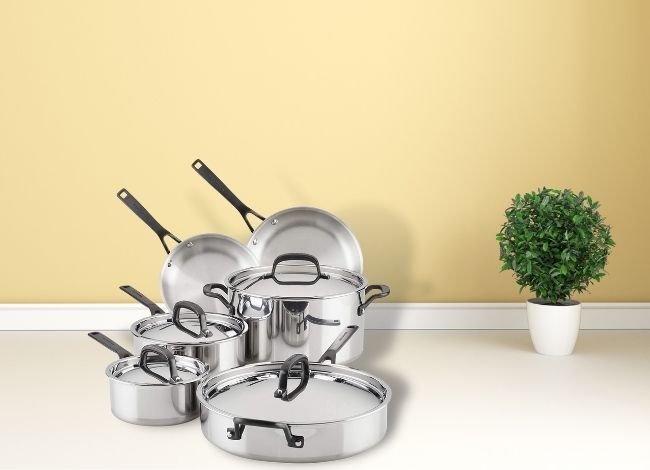
Stainless steel remains a practical choice for cooks who want durable pots and pans without a nonstick surface to protect. It comes in many sizes and price ranges. A well-made piece can handle a wide variety of meals, though construction matters more than the material name alone.
Versatility
Stainless steel is useful for searing, sautéing, simmering, boiling and braising. Many pieces can go into a conventional oven, subject to their handle and lid limits. Standard metal cookware should not go in a microwave. Induction also requires a compatible magnetic base; stainless steel alone does not guarantee compatibility.
Highly durable
Good stainless steel cookware can last many years, but it is not indestructible. Avoid leaving it empty over excessive heat or plunging a hot pan into cold water. Stainless steel is corrosion-resistant, not corrosion-proof: chlorine bleach and unsuitable cleaners can damage it. Dishwasher suitability varies, and handwashing can help preserve the finish.
Attractive outlook
Polished or brushed stainless steel has a simple appearance that suits many kitchens. Water spots and heat discoloration may appear with use. These marks do not necessarily mean the pan is ruined; use a cleaner approved for its finish rather than harsh scrubbing.
Affordable in price
There are basic stainless steel sets and premium fully clad pieces. You do not need to buy a large set to benefit from the material. Compare the pans you will actually use, base thickness, handle comfort and construction instead of assuming stainless steel is always the cheapest option.
Admirable cooking ability
An aluminum or copper core helps stainless cookware spread heat. Fully clad construction extends the layers through the body, while a base-disc design concentrates them underneath. Stainless steel alone is a relatively poor heat conductor. Neither material wins every heating comparison without considering the actual pan.
No food reactivity
Stainless steel is generally suitable for acidic recipes such as tomato sauces, unlike some bare reactive metals. However, “nonreactive” does not mean zero metal transfer under every condition. Cook according to the manufacturer’s instructions, and use suitable food-storage containers for leftovers.
Simple cleaning
Routine washing usually needs warm soapy water and a sponge. Let the pan cool, soak stubborn residue and use a suitable stainless cleaner if needed. Our care guide for bonded stainless steel pans explains cleaning in more detail. Uncoated stainless steel does not need a cast-iron-style seasoning layer.
Disadvantages of using stainless steel cookware
Durability does not mean stainless steel is effortless for every recipe. Food release takes practice, and a thin or poorly constructed pan may heat unevenly. Consider these points before choosing ceramic vs stainless steel cookware for daily use.
Extra oils
Frying eggs or delicate foods can take more care than in nonstick, but you do not need to flood the pan with oil. Preheat moderately, add fat suitable for the recipe and let food brown before turning it. Boiling and steaming do not require added oil.
Heat distribution depends on construction
Thin stainless steel without a suitable heat-spreading core or base can produce uneven results. Good clad or disc-base cookware addresses this weakness. Match the burner to the pan and avoid using excessive heat as a shortcut.
Leaching tendency
Some nickel and chromium can transfer from stainless steel into food, with the amount affected by the alloy, food acidity, cooking time and prior use. This does not mean every meal becomes poisonous. People with a nickel allergy should avoid cookware containing nickel, in line with public-health guidance.
Our Recommended Stainless Steel Cookware Sets:
Check the construction of individual pieces, since a brand can offer several cookware materials. These guides can help with that choice:
- Great Jones cookware
- Anolon Stainless Steel Cookware — induction cookware guide
Stainless steel vs. ceramic cookware comparison: Which is better?
For ceramic vs stainless steel cookware, choose ceramic nonstick when easy release and gentle cooking are your priorities. Choose uncoated stainless steel when browning, pan sauces and a cooking surface without a nonstick layer matter more. Both categories can heat well when the underlying construction is good.
Check the exact oven rating and induction compatibility before buying either type. For solid ceramic, also check stovetop and microwave suitability and avoid sudden temperature changes. Price and durability depend on the individual piece, not simply whether the label says ceramic or stainless.
If your shortlist also includes traditional nonstick, our stainless steel and nonstick buying comparison covers that decision. A practical kitchen can combine a durable stainless saucepan or skillet with a ceramic nonstick frying pan for delicate foods.
Final Thoughts
The best ceramic vs stainless steel cookware choice fits your meals, budget and care habits. Stainless steel is a strong option for long service, while ceramic nonstick offers convenient release and cleanup. Compare the advantages and limitations of the actual pans, then buy the pieces you will use rather than expecting one material to do every job equally well.