
Last Updated on November 4, 2026
Shopping for your kitchen can be confusing when every cookware aisle introduces another cooking method. Waterless cookware is especially likely to raise questions: does it really cook without water, do you need oil, and is it worth the extra cost? The name describes a low-moisture cooking method, rather than a promise that every recipe needs no liquid.
A suitable pan and matching lid help food cook using its natural moisture, often with little added water. That can be convenient for vegetables and other dishes, but rice, beans and many recipes still need liquid. Here is how the method works and what to check before buying.
What is waterless cookware?
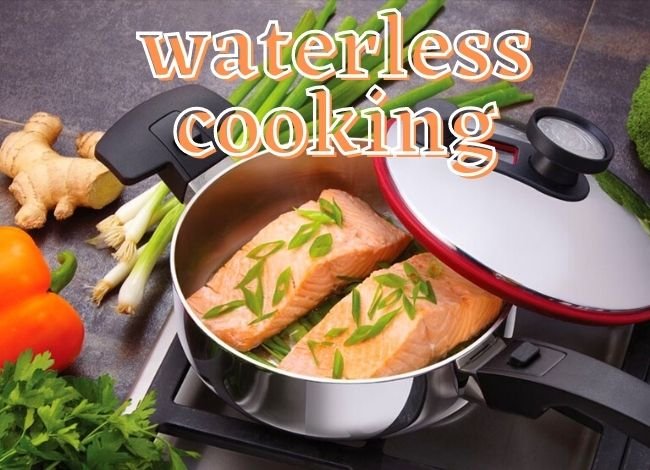
Waterless cookware is generally a cooking system with a close-fitting lid and a heat-spreading base or clad body. The lid helps retain moisture released by the food. Once the cooking environment is established, the burner is reduced to low so the food cooks gently without being submerged in water.
“Waterless” does not mean water-resistant, completely dry cooking or a substitute for a pressure cooker. A vapor seal differs from a pressure-cooker locking system. Do not block vents or try to turn an ordinary covered pot into a locked pressure vessel.
- A matching lid designed to retain vapor; some systems use a steam-control valve or audible indicator, while others do not.
- A substantial heat-spreading base or bonded body, commonly with a stainless steel cooking surface.
- Low heat after the vapor seal forms, rather than continuous high burner power.
- Less added water for suitable foods, with liquid and fat adjusted to the recipe.
- A price and weight that may be higher than a basic saucepan; compare the actual pieces you need.
How to use waterless cookware?
Start with your cookware’s own instructions and a recipe written for that system. Do not apply one brand’s valve procedure to another brand’s lid. A general approach for moisture-rich vegetables is:
- Prepare and load the food. Wash the vegetables, cut reasonably even pieces and choose a pan suited to the quantity. Rinsed vegetables may retain enough water for some recipes; drier foods may need added liquid.
- Fit the correct lid. Set any adjustable valve exactly as the manufacturer directs. Some lids have no valve to open or close.
- Begin over the recommended heat. Medium heat is a common starting point, but burner output varies. Keep gas flames beneath the base.
- Watch for the specified signal. Depending on the system, this may be escaping vapor, a lid that spins freely or an audible indicator. Reduce the heat to low as directed.
- Cook for the recipe’s time. There is no universal 15- or 20-minute cooking time. Avoid repeatedly lifting the lid, but check the food when necessary and re-form the seal according to the instructions.
- Check doneness and open carefully. Keep hands and face clear of escaping steam. For meat and poultry, use a food thermometer rather than treating a whistle or valve click as proof that the food is safely cooked.
How to Choose the Right Waterless Cookware?- Some Popular Models
You will find some excellent cookware brands, but a brand name alone does not establish a waterless cooking system. The shortlist below contains brands and product lines, so compare the exact pan, lid and instructions before deciding:
- Duxtop: Compare the particular stainless steel set and lid design. Ordinary boiling or steaming features do not, by themselves, establish a dedicated vapor-seal system.
- 360 stainless steel cookware: The maker describes its Vapor Cooking system using a matching lid and a vapor seal, rather than a universal whistle-valve procedure.
- Cuisinart: Check the collection’s cooking surface and lid; not every ceramic or stainless steel pan is a waterless system.
- Maxam: Some stockpots are specifically described as waterless and have steam-control valves. Use the directions supplied for the particular pot.
- Chef’s Secret: Look for explicit low-moisture cooking instructions and a matching lid rather than relying on the name alone.
- Calphalon: Compare the individual line and cooking method instead of assuming every coated or stainless steel product is waterless.
Check capacity, lifting weight, handle comfort, lid fit, care requirements and warranty terms. If you use an induction hob, verify the model’s magnetic base and the hob’s pan-size requirements. Our guide to choosing induction-ready cookware explains those checks.
What is the waterless cooking process?
Heat turns some of the food’s moisture into vapor. Condensation around the lid and rim helps retain that moisture, allowing cooking to continue after the burner is lowered. The lid is important, but more heat is not the solution if food starts drying out or sticking.
| Waterless cookware feature | Practical meaning | Important limit |
|---|---|---|
| Water | Little added water may suit moisture-rich vegetables | Dry rice, beans and other foods need the liquid their recipe requires |
| Oil or butter | Can be reduced or omitted for some moist cooking methods | Searing, sautéing and delicate foods may still benefit from fat |
| Lid or valve | Follow the specific vapor-seal or steam-control design | Not every lid whistles, and not every valve should be manually closed |
| Cooking time | Depends on the food, quantity, cut size and stove | A steam signal means adjust heat, not that every food is cooked |
| Oven use | Depends on the pan, lid, knob and handle ratings | Use the lowest applicable limit; some handles require removal |
| Dishwasher use | Varies by collection and component | Detachable handles or knobs may need separate handwashing |
The differences between systems matter. For example, 360 describes checking its vapor seal by gently spinning the lid when vapor escapes. Saladmaster uses its Vapo-Valve indicator to signal when to lower the heat. Selected Maxam steam-control pots have their own adjustable-valve directions. These procedures should not be mixed together.
Oil is not forbidden, and water is not limited to a token splash. Follow a suitable recipe for rice or legumes rather than trying to cook dry ingredients with the same moisture as rinsed vegetables. You can also use many of these pans for ordinary cooking when the manufacturer allows it.
Why do you need waterless cooking?
You may enjoy the method if you regularly cook vegetables and like food that is not diluted by a large pot of water. Cooking vegetables with a small amount of liquid and only as long as necessary can help retain nutrients. However, a lid does not capture every nutrient, and heating still changes food.
The meal is not automatically healthier because the pan uses less water or oil. Ingredients, portion sizes and the overall cooking method matter. Consider this a useful technique to learn, rather than a requirement for every healthy kitchen.
Primary materials of the Waterless cookware
Construction varies. Stainless steel is common for the cooking surface, with aluminum or sometimes copper used to help spread heat. A pan may have a bonded base disc or layers extending through its body. Not every design contains a separate iron layer, and more named layers do not automatically mean better performance.
For example, 360 describes a stainless steel interior, an enclosed aluminum core and a magnetic stainless exterior. Other manufacturers use different grades and arrangements. Check the actual construction and induction compatibility rather than assuming the word “waterless” specifies the materials.
What is Surgical Stainless Steel?
“Surgical stainless steel” is a description used for several stainless alloys, not a complete specification of a pan. Ask which grade is used and where. Stainless steel’s chromium helps provide corrosion resistance, while nickel is present in many cookware grades. The label does not prove zero metal transfer, make a pan naturally nonstick or establish that it is safer than every coated alternative.
What is heavy cladding used in waterless cookware?
Cladding bonds layers of different metals together. A heat-conducting core helps spread heat, while the stainless steel surface provides a durable cooking area. Thickness, whether the layers extend through the sides, and the quality of the base all affect performance. The lid retains moisture; the cladding itself does not create a pressure seal.
Advantages of using waterless cookware
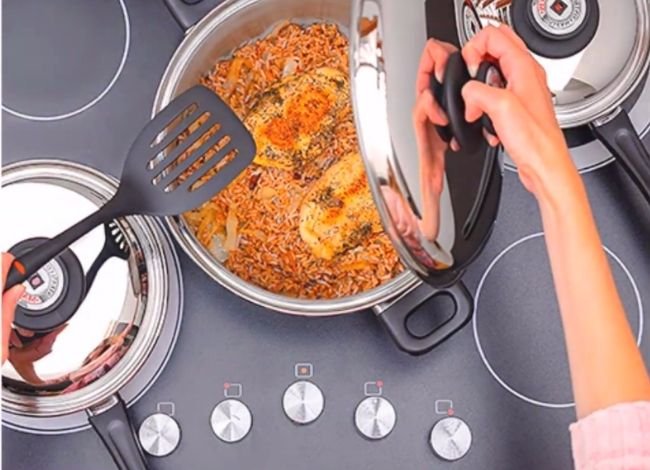
The main appeal is controlled cooking with less added liquid, supported by a well-fitting lid and suitable heat settings. These are the benefits to consider, without assuming every product performs identically:
- Healthy cooking options: Some dishes need little added fat, and cooking vegetables in less liquid avoids draining away a large volume of cooking water. This does not guarantee a nutritionally complete meal or preserve every nutrient.
- Cooking efficiency: Good heat distribution and a covered pan can simplify preparation. Actual cooking speed depends on the recipe, quantity and stove; it is not always faster than other methods.
- A matching lid: The lid is part of the cooking system. Use the correct fit rather than substituting another pan’s cover and expecting the same vapor seal.
- Low heat: Turning the burner down after the proper signal can reduce unnecessary heating. Energy savings vary with the stove and cooking time rather than being a guaranteed amount.
- A durable cooking surface: An uncoated stainless interior avoids relying on a nonstick layer. It still requires correct heat, cleaning and food-handling practices.
- Manageable maintenance: Warm soapy water and a suitable sponge often handle routine cleaning. Overheated or dried-out food can still stick and require soaking.
- Durability: Well-made pots can give many years of service. A lifetime warranty is not universal and does not mean damage, normal wear or every component is covered.
- Buying support: Compare written warranty terms, instruction quality and service support. Buying directly from a maker does not, by itself, guarantee a better product or the lowest price.
Setbacks of the Waterless pots and pans
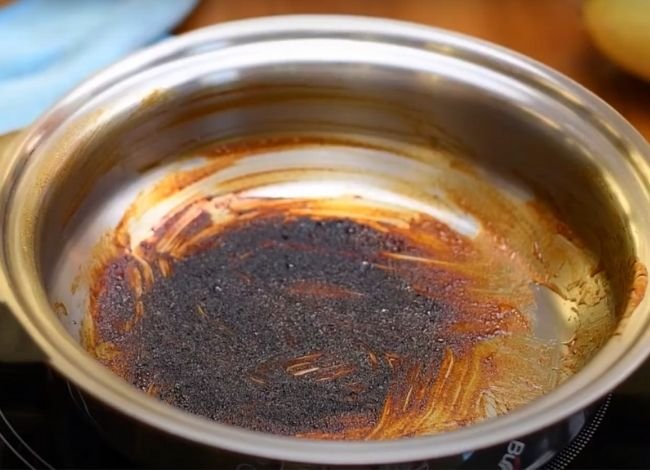
Every cooking system has trade-offs. These points are worth weighing before paying for a full set:
- Expensive: Dedicated systems can cost more than a basic covered saucepan. Whether the premium is worthwhile depends on how often you use the method and the construction you receive.
- Heavyweight: Thick bases and clad bodies can add weight. Check how comfortably you can lift a pot when it is full.
- Hard-to-clean lids: Rims, valves and fittings need attention. Clean them as instructed and do not dismantle parts that the manufacturer does not intend you to remove.
- Dishwasher restrictions: Some pieces are dishwasher-safe, while handles, knobs or particular collections may require handwashing. Check each component rather than applying one rule to every system.
- Opening the lid: You can check food when needed, but frequent opening loses heat and moisture. Replace the lid and re-establish the seal as directed instead of treating it as something that must never be opened.
- Not ideal for every recipe: The low-moisture covered method does not replace every cooking technique. Suitable stainless pans can also sear, sauté or fry, but those methods may require different heat and some fat.
- Oven limits: Some systems are oven-safe; others have lower-rated handles, knobs or lids. Follow the exact collection’s instructions, including any requirement to remove detachable handles.
- Handle materials: Handles may be metal, phenolic, silicone-covered or another material. They are not all plastic. Inspect loose or damaged fittings and use only suitable replacement parts.
Let the cookware cool before washing. Soak stubborn food and use a cleaner approved for the finish rather than assuming waterless cooking prevents scorching. For more on that surface, see our guide to cleaning uncoated stainless pans. Keep lid rims and any valve clean so they function as designed.
Is waterless cookware worth it?
Waterless cookware can be a good investment if you enjoy low-moisture cooking and will use the pans often. A matching lid, reliable construction and clear instructions matter more than blanket claims about “surgical” steel, perfect nutrition or effortless cooking.
If you already have a well-made covered stainless pan, you may be able to cook suitable low-moisture recipes without replacing your whole kitchen. Choose a dedicated system when its lid design, performance and support justify the price for you. Buy for the meals you make, and expect a little practice with heat and moisture.