
Last Updated on November 11, 2026
That first brown mark in a favorite enamel pot can be frustrating. Before you reach for a stronger cleaner, let the pot cool and give it a gentle wash. A smooth stain can stay visible even after the pan is clean. If something is stuck to the surface or a bit of enamel is missing, it needs a different approach.
How to Clean Discolored Enamel Cookware
Enamel is a glass-like coating fused to a metal body, often cast iron or steel. Check which type you own before using a stain remover or heating a cleaning solution. The same glossy finish can appear on pieces with different care instructions.
| What you see | Likely cause | What to do |
|---|---|---|
| Flat yellow, tan, or gray mark | Discoloration on intact enamel | Wash normally. If it stays smooth after washing, the color can be cosmetic. |
| Raised crust or a sticky film | Burnt food or oil residue | Soften it with warm, soapy water. Wipe gently with a soft sponge. |
| Missing glaze, flaking, or a crack inside | Possible cooking-surface damage | Pause cooking and contact the maker with photos. |
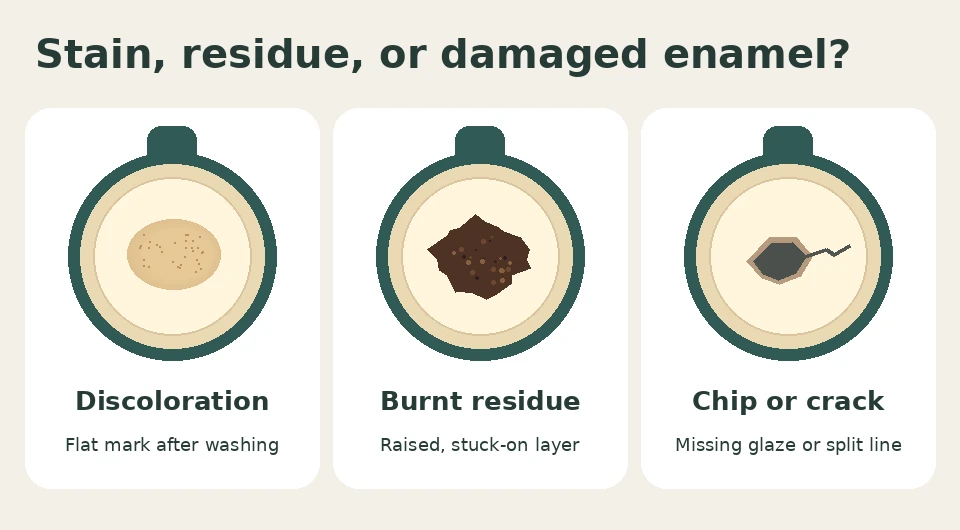
Start With Mild Dish Soap
Let the cookware cool to room temperature. Wash it with warm water, mild dish soap, and a soft sponge. Rinse well, dry it with a towel, and check the mark in good light. If the surface is intact and the mark is still smooth, you can leave it alone. Lodge’s enamel care guide says normal staining does not affect how its enameled cast iron cooks.

If you’re trying to clean discolored enamel cookware made of steel, check the stockpot instructions first. Le Creuset’s enamel-on-steel stockpots call for hand-washing and thorough drying. Water can get trapped if the whole pot is submerged. For a ceramic-coated frying pan, use the care advice for that finish. See our guide to removing stains from ceramic-coated frying pans.
Soften Burnt Food Before Scrubbing
If food is stuck to the bottom, fill the cool pot with enough warm, soapy water to cover the residue. Le Creuset’s cast-iron cleaning guide suggests starting with a 15–20 minute soak. Wipe gently with a soft sponge and repeat if needed. For stubborn residue on its enameled cast iron, Le Creuset describes simmering water with one or two tablespoons of baking soda for about eight to ten minutes. Let the liquid cool before draining, then wash, rinse, and dry the pot.
Use that simmering method only when your maker permits it. STAUB’s care instructions start with mild dishwashing liquid and a nonabrasive sponge. For stubborn food, they advise soaking or gently warming water with a little dishwashing liquid. Skip steel wool, abrasive scouring powders, and the old heated peroxide mixture.

Treat Cosmetic Stains Only If They Bother You
If you want to lighten a smooth stain, start with a cleaner the maker names for your model. Le Creuset offers a cookware cleaner for its enameled cast iron and says a paste of baking soda and water may help on some marks. Lodge lists its own enamel cleaner and a separate diluted bleach treatment for persistent stains on its enameled cast iron. Follow the manufacturer’s directions for that exact cookware and cleaner.
Earlier photos of lemon, salt, and laundry products


What to Do if the Cooking Surface Is Chipped or Cracked
Stop cooking with the piece if you see missing glaze, loose flakes, exposed metal inside, or a line that looks like a crack. Let the pot cool, take a clear photo, and ask the manufacturer to assess it. Skip scraping, sanding, and coating over the spot. Le Creuset’s care and use instructions say to stop using cookware with chipped interior enamel because loose fragments can injure someone if swallowed. If you see fragments in food or suspect they fell in, discard the food.
A chip confined to the exterior can call for different care. Le Creuset’s cookware FAQ treats a small outside chip differently from an inside one. Ask your own manufacturer what to do, especially if the damage is on the rim, extends inward, or appears to be spreading. For a different cookware finish, see our guide to cookware safety for ceramic pots and pans.
How to Keep Enamel Looking Good
Use low to medium heat for most cooking, follow your model’s guidance for preheating, and avoid pouring cold water into a hot pot. Choose wood or silicone utensils, lift the pan to move it across a glass cooktop, and pad stacked pieces so their rims do not knock together. Wash and dry the pot and lid before storing.
The original video is included above. Follow the written care instructions for your cookware when choosing a cleaner or a scrubbing tool.
When you go cookware shopping, check the care instructions for the pan and lid. At home, the easiest way to clean discolored enamel cookware is to start gently and check whether the mark is a stain, residue, or damage before you do anything more.
Related reading Review of Scanpan cookware · What is Waterless cookware?