
Last Updated on November 11, 2026
If you grew up watching someone cook in an aluminum pot, you might still have one tucked away in the kitchen. Today we have plenty of choices, from ceramic to cast iron, but an old family pan is worth a closer look. If you’re wondering how to clean vintage aluminum cookware, start by checking the surface that touches the food. A plain aluminum pot and a nonstick pan can look similar from the outside and need different care.
Check the finish before you wash
Bare aluminum can be silver, dull gray or darkened from use. Aluminum can discolor and corrode, and iron parts such as screws or handles can rust. Hard anodizing changes the surface of the aluminum itself. A pan with an anodized body can still have a separate nonstick lining, so check the inside as well as the base. If the maker identifies a stainless steel cooking surface, use the instructions for cleaning stainless steel pans. Our guide to ceramic-coated and traditional nonstick surfaces explains the common nonstick finishes.
| Finish | How to clean | What to watch for |
|---|---|---|
| Bare aluminum | Warm water, mild dish soap and a soft sponge. A brief soapy soak loosens stuck food. | Skip the dishwasher and harsh cleaners. Avoid long contact with acid or salt. |
| Anodized aluminum, with no separate cooking coating | Hand wash with mild dish soap and a soft sponge. Follow the model’s care guide. | Skip abrasives and acid baths. Set it aside if the anodized cooking surface is scratched or worn. |
| Coated or lined aluminum | Clean for the surface that touches the food. Use a soft sponge on intact nonstick, including ceramic nonstick. | Follow the liner or coating’s care guide. Stop using it if the coating peels or the lining is damaged. |
| Unknown vintage piece | Gently wipe away surface dust with a damp cloth so you can read the maker’s marks. Dry it right away. | Keep it out of food use until you can verify the material and intended use. |
Bare aluminum reacts more readily with acidic or salty foods compared to stainless steel. Health Canada’s cookware guidance recommends hand washing with mild detergent, using nonmetal utensils, and avoiding high-acid or high-salt foods in bare aluminum. Move leftovers to a food storage container instead of leaving them in the pan.
Discoloration, pitting and unknown vintage pieces
Once the surface is clean and dry, look at it in good light. Smooth darkening can be cosmetic on a known bare aluminum pan. Pits are depressions in the metal. Stop using a piece for food if the cooking surface has deep pits, rough corrosion or flaking, or if an anodized finish is worn through or a lining is peeling. A wash can remove grease and food, but it can’t repair the surface. Nordic Ware’s bare aluminum care guide explains how dishwasher darkening and patina can develop on its bare aluminum bakeware.
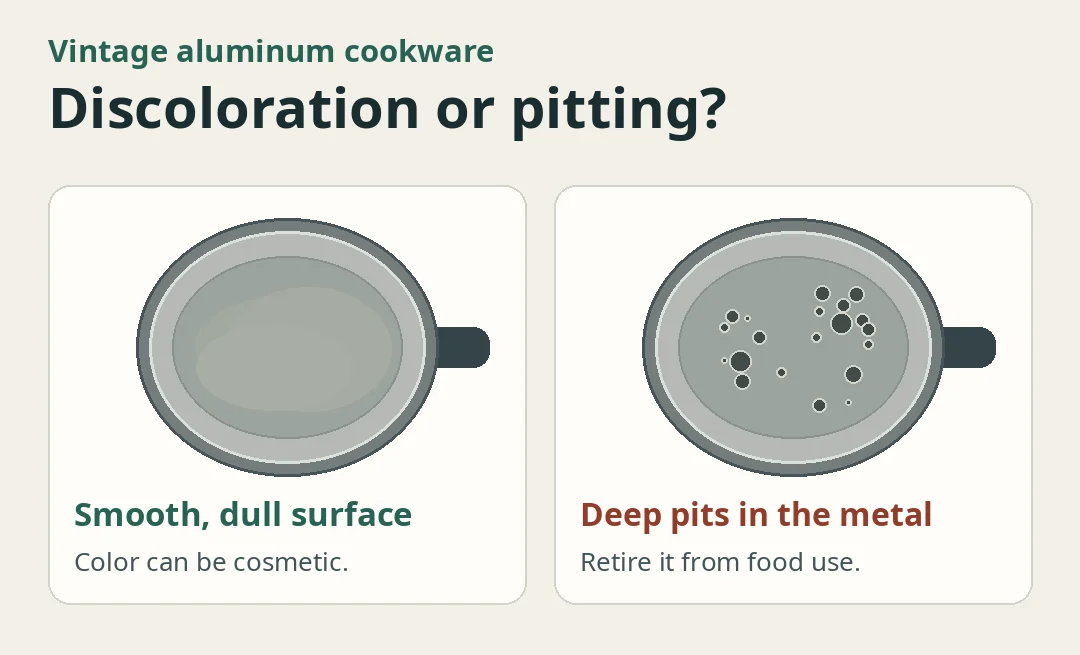
With a thrift-store find or hand-me-down, photograph the stamp on the base, any model number and the cooking surface. Look up the maker’s manual or ask the maker to identify the finish and confirm it was made for food contact. Color, weight and a magnet can’t establish the alloy or whether it releases lead. If the maker, origin or intended use can’t be verified, keep the piece for display. If you want an heirloom assessed, ask your local public health department about a laboratory test for lead that can migrate into food. A home swab result alone can’t establish how much lead will leach. See Public Health – Seattle & King County’s cookware guidance.
Check the FDA’s cookware lead advisory and the January 23, 2026 IKM recall if you can identify the piece. The FDA found that certain imported aluminum and other metal cookware can release lead. If yours matches a listed product, follow the advisory or recall instructions. The FDA advises against donating or refurbishing cookware covered by its lead warning.
How to clean vintage aluminum cookware in seven ways
All you need to start is mild liquid dish soap, warm water, a soft sponge or cloth and a clean towel. Let the pan cool before you wash it. Choose a method that fits the finish and what you’re trying to remove.
1. Hand wash away everyday grease
Wash an intact, identified pan with warm water and a few drops of dish soap. Wipe with a soft sponge, rinse, then towel-dry. Hand washing is the default for vintage pieces. Use a dishwasher only if the maker specifically allows it for that model.
2. Soak stuck food in warm, soapy water
Cover the residue with warm, soapy water for a few minutes, then wipe it away with a soft sponge. Repeat if needed. Keep wooden handles and unsealed seams out of the soak. For example, Nordic Ware’s Naturals stovetop cookware allows a soak of up to 30 minutes for its own bare aluminum pans.
3. Use a soft brush around rivets
Where a sponge can’t reach, gently loosen softened residue around rivets and along the rim with a soft nylon brush. Rinse the crevices and dry them well. Follow the model’s directions for coated surfaces. Calphalon’s nonstick care instructions allow a soft-bristle brush on the hard-anodized nonstick pans they cover.
4. Wipe the outside with a damp cloth
For exterior grease, hold a warm, soapy cloth against the spot briefly, then wipe. Rinse with a clean damp cloth and dry. A glossy lining and a dull exterior may need different care. Keep automotive polish and metal polish off the food-contact surface unless both the cookware maker and the product label explicitly allow that use.
5. Spot-clean with a product approved for the finish
If a soapy soak leaves residue, use a cleaner only when the cookware maker and the cleaner label both approve it for that surface and location. Follow the label’s contact time and rinse thoroughly. Leave steel wool, chlorine bleach, caustic degreasers and oven cleaners off your vintage cookware. For example, Easy-Off’s heavy-duty oven cleaner label specifically excludes aluminum.
6. Treat discoloration on bare aluminum only if the maker permits a dilute acid
The Cookware Manufacturers Association’s care guide describes a short, diluted treatment with cream of tartar for discoloration on bare aluminum. If your maker permits that method and the sound pot is intended for stovetop use, use the maker’s instructions first. The industry guide gives 2–3 tablespoons of cream of tartar per US quart of water for 5–10 minutes. Let it cool enough to handle, then wash gently, rinse and dry. Skip acid treatments on pitted, anodized, coated or unidentified pieces and never boil straight vinegar.
7. Use baking soda only on a model that permits it
Some manufacturers allow baking soda on specific bare aluminum products. If yours does, follow that model’s directions and use a soft cloth or sponge. Skip baking soda on unknown surfaces or where the maker advises against it, and leave peroxide out of the mix. If a clean, smooth patch of dark color remains, you can leave it alone.
Cleaning video and original photos
If you’re watching the original video to see how to clean vintage aluminum cookware, check your pan’s finish first. A general aluminum-cleaning demo may use products that don’t suit your pan.
View the original cleaning ingredient photos


